Minister Creagh outlines government policies for trees
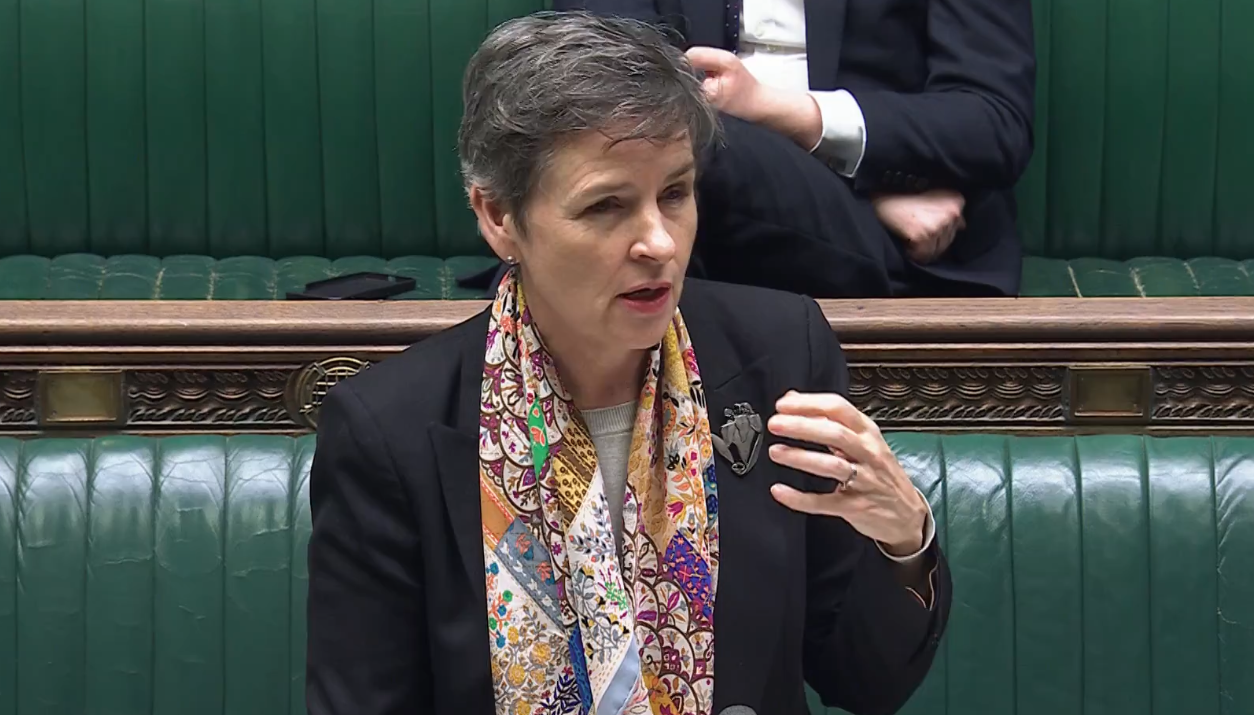
Minister Creagh speaking from the front bench in the House of Commons
Speaking for the government in an Adjournment Debate, in response to a speech from Alex Mayer MP, Mary Creagh outlined the important work that her department is doing to plant more trees and forests in England, of nurturing young trees and ensuring that the right species are planted in the right places. Some selected highlights below.
“Across England, trees and woodlands are more than just part of our landscape; they are intimately woven into our national identity. They cool our air and our cities and shelter our wildlife. Whether it is on a walk through an ancient forest or for a moment beneath a single tree in a city park, trees have a remarkable ability to restore us. They help us with anxiety, grief and loneliness and give us space to breathe. They are woven into our shared national culture. They have stood as symbols of endurance, wisdom and renewal. They are centuries-old sentinels—witnesses to our history. Growing up in Coventry, I played every weekend in Coventry’s War Memorial Park, a great city’s act of remembrance for those we lost in world war one. Every tree has a plaque beneath it remembering the people who died. It is a living memorial to the lost. Our woodlands are places where childhood memories are made and where Christmas strolls and new year’s day walks become traditions, where children climb, and occasionally fall, where dens are made and where dogs are walked—hopefully on a leash.”
“As the Minister with responsibility for forestry, I have the privilege of regularly seeing the majesty and benefits of our woodlands up close, and I reassure my Honourable Friend that we are taking the necessary steps to ensure that we have woodlands and trees for the future. Just last year, I opened Forestry England’s Delamere seed processing centre—a net zero building made of timber—which is named after long-serving Forestry England team member Vernon Stockton. The centre will process up to 4 tonnes of high-quality tree seeds, providing the starting point for the forests of the future.
I have stood in Kielder forest with the people who manage it. I have visited the Community Forest Trust, which sent me home with two Scots pines and two hornbeams. Three of those trees have survived three London droughts. Of course, back in 2011 I led the fight against the Conservative party proposal to sell off the public forest estate; I am passionate about trees.”
“Tree-planting in England is at its highest-recorded rate for 20 years—7,000 hectares last year. We will boost that further through our manifesto commitment to create three new national forests. What a privilege it was to plant a tree as part of that establishment. We will plant 20 million trees over the next 25 years to create that new western forest. On Monday, we opened the expressions of interest process for the planned forest in the Oxford-Cambridge growth corridor. We will launch the competition for a new national forest in the North or the Midlands by July this year. These new forests will bring peace, shade and joy to millions around the country, and the Ox-Cam forest will bring forestry much closer to my Honourable Friend’s constituents.”
“I, too, am furious when I see parched trees lining motorways or streets on new developments where the trees have been left to die. I encourage local people who care about their trees to water them, particularly in the early days and during hot summers. My hon. Friend mentioned the urban tree challenge fund. Like our woodland creation grants, that fund did not simply fund planting; it provided multi-year establishment costs alongside the up-front capital costs.
In our urban tree planting grants, we require evidence of good establishment rates, and we withhold payments where that has not been met. That is not always the case for planting that is not funded by Government—for example, on the new housing estate that my hon. Friend talked about, where, despite planning conditions, the same effort towards tree survival is not always made. Developers must do better. Those trees are not decorations; they are an investment that will bring future residents the benefits we have talked about today. Aesthetics cannot take priority over survival.”